Talon.One · UX Research | Product Design | Experimentation · 2025–Present
A/B Test
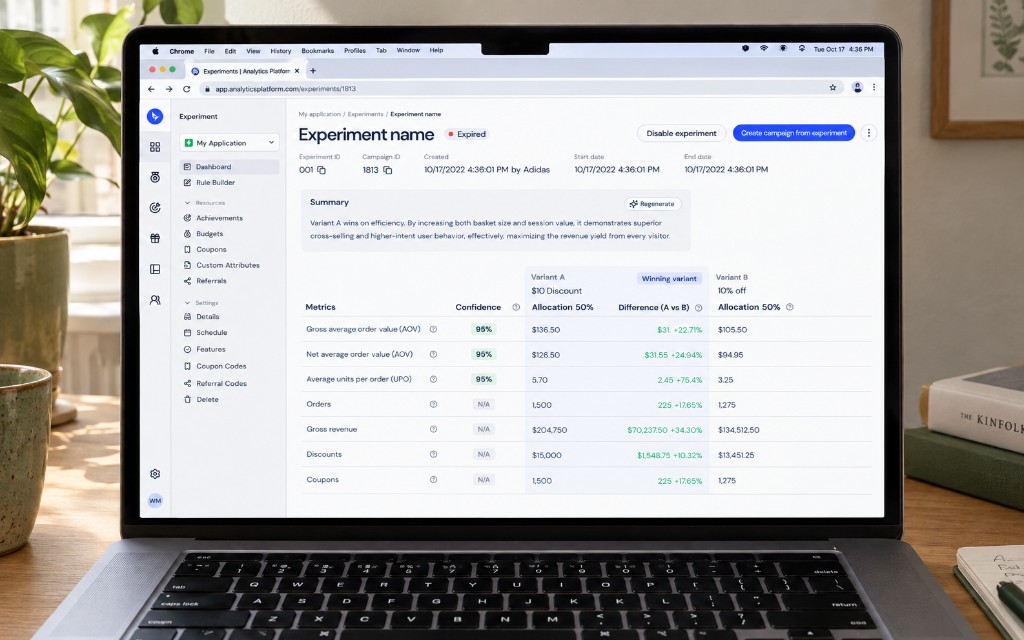
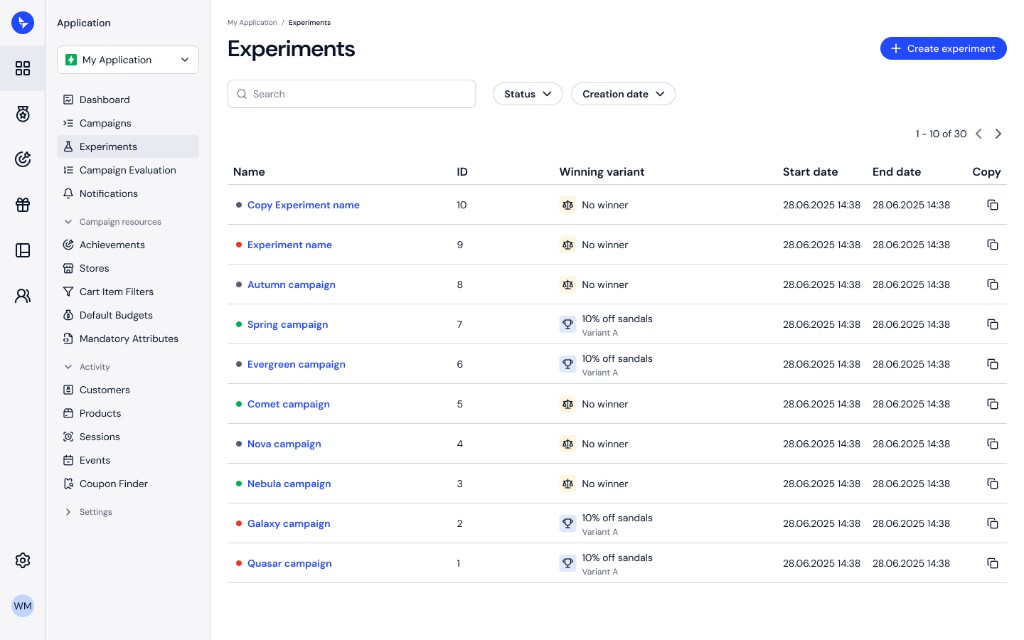
Talon.One is a promotion engine that unifies promotions and loyalty programs into one strategy, turning customer rewards into measurable results. Disconnected discounts drain margins, and basic loyalty programs fall flat on their own. Experiments is the feature that lets customers test which promotion actually earns its keep, instead of guessing.
- Role
- UX Research | Product Design | Experimentation
- Time
- 2025–Present
- With
- Talon.One
Ingredients
- UX Research
- Product Design
- Experimentation
Experiments is the feature that lets customers test which promotion actually earns its keep, instead of guessing.
Context
Talon.One powers promotions and loyalty programs for some of the world's most-loved brands. For a long time, the platform had no built-in way to test one campaign against another, customers had to decide which promotion to run on gut feel, or build a workaround themselves.
Problem
01
No native testing
No reliable way for customers to test campaigns against each other inside the platform.
02
Manual workarounds
Some customers built workarounds, running two campaigns in parallel and comparing data manually, but the data was complex and often inaccurate.
03
Guest vs logged-in
A costly side effect: a shopper could see one promotion while logged in and a different one if they checked out as a guest, depending on the workaround.
04
Damage before visibility
Customers had no visibility into what was happening inside their campaigns until the financial damage was done.
This gap is where the idea for Experiments came from: give customers a native, reliable way to A/B test promotions without duct-taping together external tools and spreadsheets.
Approach (MVP)
Start small
Started small, with straightforward A/B testing: one campaign against another with a basic 50/50 traffic split.
Keep existing tools
Customers with an existing external allocation tool, like Braze, could keep using it and pass the assignment into Talon.One.
Native assignment
Everyone else could let Talon.One handle the split, randomly and reliably assigning customers to a variant.
Tight MVP scope
Kept the MVP tightly scoped, solving two problems: no reliable way to compare campaigns, and no guarantee of a consistent customer experience.
Output (Beyond the MVP)
01
Goals
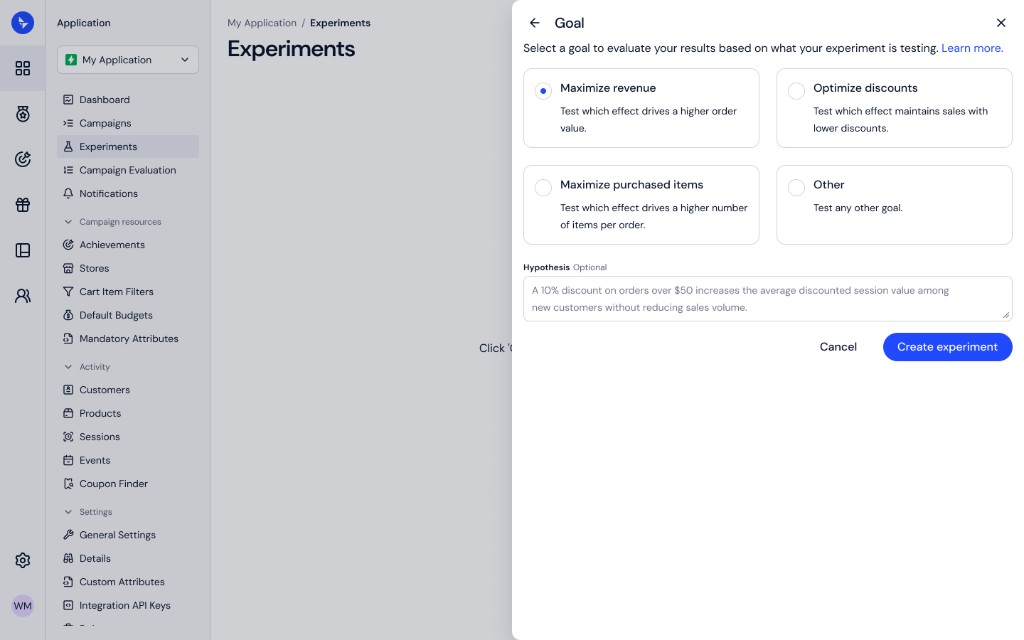
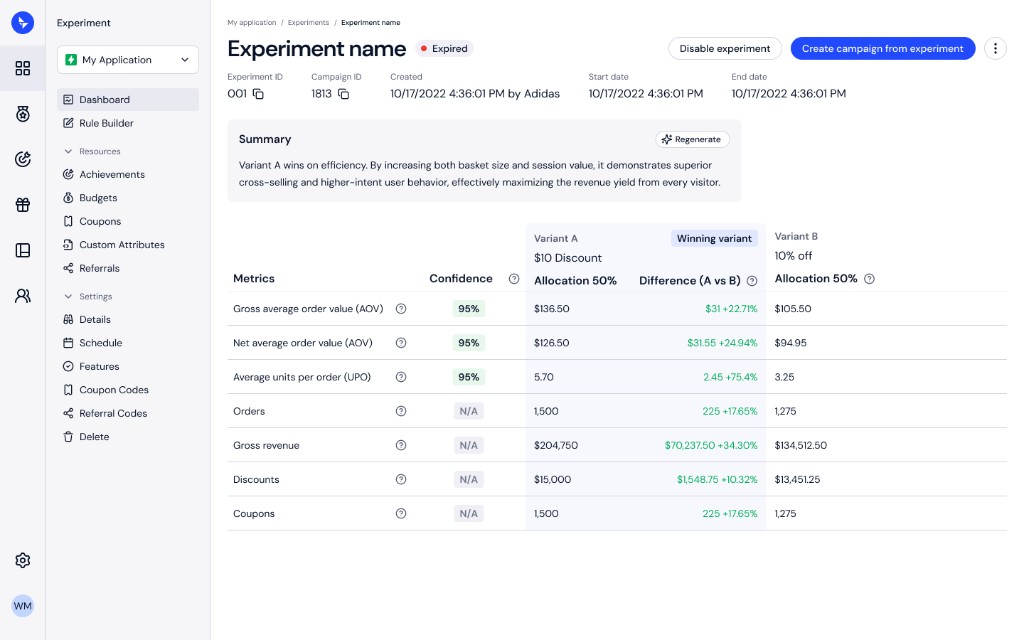
Customers can attach a goal to each experiment, with AI-assisted analysis helping determine whether that goal was met.
02
Flexible allocation
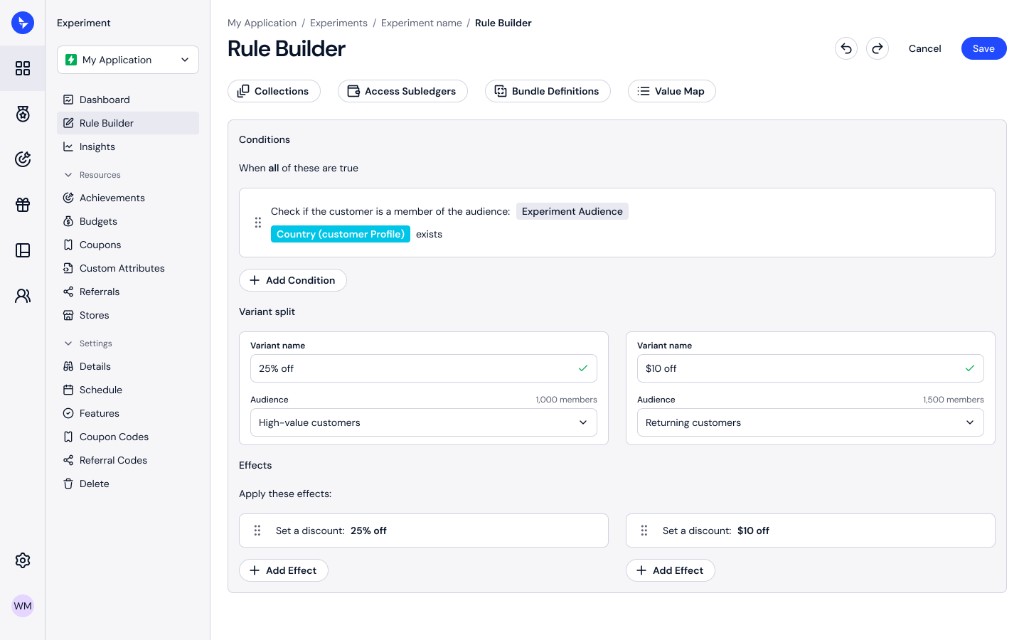
Traffic no longer has to be a flat 50/50 split, customers can set up a control group versus a non-control group, or weight the split as needed.
03
Audience-based assignment
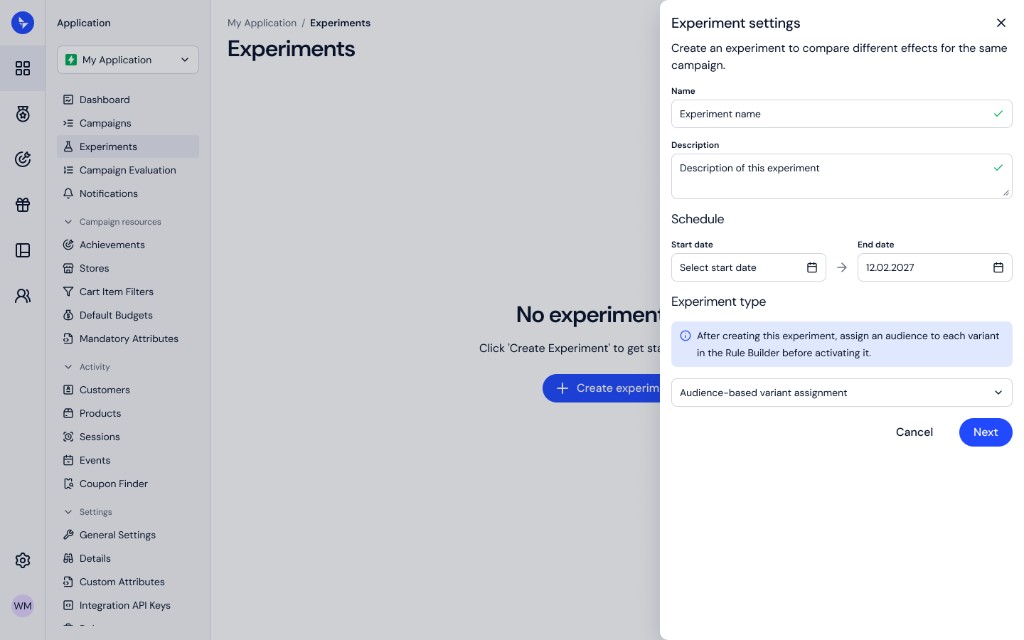
By combining Experiments with the existing audience feature, customers can allocate specific, pre-defined audiences to each variant, rather than relying purely on random assignment.
Reflections
Adoption has been strong, and active research continues as more customers bring Experiments into their day-to-day promotion strategy. The bigger opportunity ahead is turning Experiments from a one-off testing tool into a continuous feedback loop, where every test run today makes the next campaign recommendation smarter. We're already scoping support for more than two variants at once, and deeper segmentation of results.